
CEO's short of decision rights and organisational capacity around them.
Most conversations about the CEO still centre on what the role needs to drive.
Very few focus on what the role needs to absorb.
The modern CEO is expected to deliver growth, transformation, resilience, culture, capital allocation, stakeholder management and, increasingly, to act as the public face of the organisation. The list keeps expanding. What rarely expands at the same rate is the space to think.
I am increasingly struck by how many capable CEOs are not short of ambition or intellect. They are short of decision rights and organisational capacity around them.
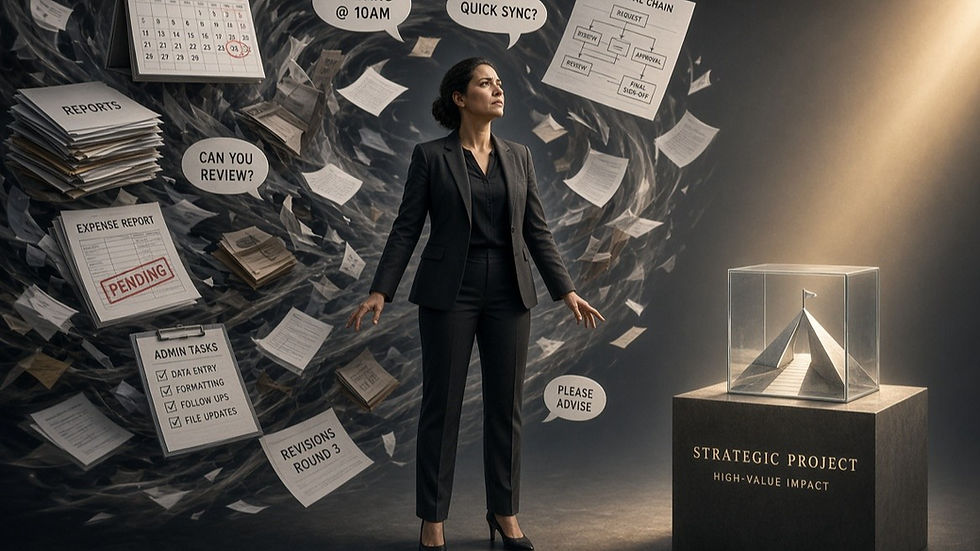
When everything lands on the CEO’s desk, two things tend to happen.
The organisation becomes slower.
The quality of judgement at the top begins to erode, not because the individual has weakened, but because the system is overloading them.
The strongest CEOs I meet are not the ones trying to hold everything. They are the ones who have built enough collective leadership that the organisation does not require them to be the answer to every difficult question.
That is a harder form of leadership to develop.
It is also the only sustainable one.
The real test of a CEO is not how many decisions they make.
It is how many decisions the organisation can make well without them.

Comments