
The End of Week Conclusion 26/9/26

The System at the Top
Most conversations about senior leadership still treat the Chairman, the CEO and the leadership team as separate subjects.
In practice, they only work, or fail, in relation to one another.
The Chairman
Many organisations still treat the Chairman role as a natural progression for a successful former CEO. That assumption is becoming increasingly costly.
The skills that make someone effective as a chief executive are not the same skills required to run a board. One role is about driving performance. The other is about creating the conditions in which performance can be properly governed.
A strong Chairman does not dominate the conversation. They make sure the right conversations happen. They protect the space for challenge, ensure bad news travels upward, and hold the tension between support and scrutiny of the CEO.
Recent research from Harvard Business Review and Egon Zehnder reinforces the point. The most effective chairs today are those who can synthesise complex information, reconcile competing perspectives, and actively shape high-quality debate rather than simply moderate it. When the Chair role is executed well, both board effectiveness and CEO performance tend to improve. When it is not, the board often becomes either too comfortable or too operational.
The CEO
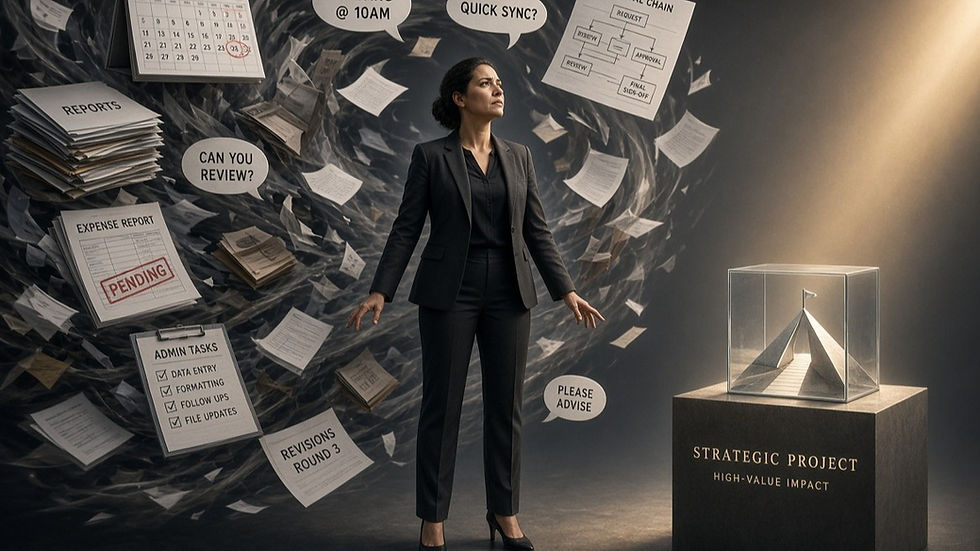
The modern CEO is expected to deliver growth, transformation, resilience, culture, capital allocation and stakeholder management, while increasingly acting as the public face of the organisation. The list keeps expanding. What rarely expands at the same rate is the space to think.
I am struck by how many capable CEOs are not short of ambition or intellect. They are short of decision rights and organisational capacity around them.
When everything lands on the CEO’s desk, two things tend to happen. The organisation becomes slower. And the quality of judgement at the top begins to erode, not because the individual has weakened, but because the system is overloading them.
Research throughout 2026 points to the same pattern: leadership capacity, not capability, is becoming the binding constraint. The strongest CEOs are not the ones trying to hold everything. They are the ones who have built enough collective leadership that the organisation does not require them to be the answer to every difficult question.
The Leadership Team
On paper, many executive groups look strong. Experienced individuals. Clear portfolios. Reasonable chemistry in normal conditions. The difficulty appears when the organisation is under strain, when priorities collide, when bad news has to travel upward, or when a decision cannot be deferred.
In those moments, many leadership teams default to one of two behaviours. Some become overly polite; issues are softened and real disagreement stays underground. Others become fragmented, with each leader protecting their own domain.
Neither response is a failure of individual competence. Both are failures of collective leadership design.
McKinsey’s work on top-team effectiveness is clear on this point: companies whose senior teams are aligned and working effectively together are almost twice as likely to achieve above-median financial performance. That capacity does not appear automatically with seniority. It has to be deliberately built, through clear decision rights, shared accountability, and a culture in which challenge is expected rather than managed.
The real test
These are not abstract governance issues. They are human ones.
I have watched capable Chairmen default to operational involvement because it feels more familiar than the quieter work of holding the room. I have seen strong CEOs become bottlenecks, not through ego, but through an absence of collective capacity beneath them. And I have sat with leadership teams full of talented individuals who, under pressure, either fall silent or protect their own territories.
The organisations that handle difficulty best are usually those that have paid attention to the relationships between these three roles. They have clarified where decision rights sit. They have built enough trust that challenge is possible. They have created a leadership system that does not depend on any single person remaining permanently exceptional.
That work is unglamorous. It rarely appears in the annual report. But it is often what determines whether an organisation can still function when the pressure rises and the easy answers disappear.
The real test of senior leadership is not how impressive the individuals look in isolation. It is whether the system they form can still make good judgements when no one has the complete answer.
Comments